Deliver the Finest Oil Products for Your Business Need
With over two decades of experience in food additives distribution, Tradeasia International has been a reliable supplier of oil solutions tailored to the diverse needs across various industries. Our extensive experience has enabled us to build a solid global supply network in delivering oil products. As a reputable supplier, we strive to be your one-stop solution, offering a comprehensive range of oil products that fulfill both standard and specialized needs. Supported by an experienced global team, we provide seamless supply chain services and industry insights to help comply your business needs.
Coordinating cargo consolidation and shipping based on the company's supply chain
strategy to meet your requirements.
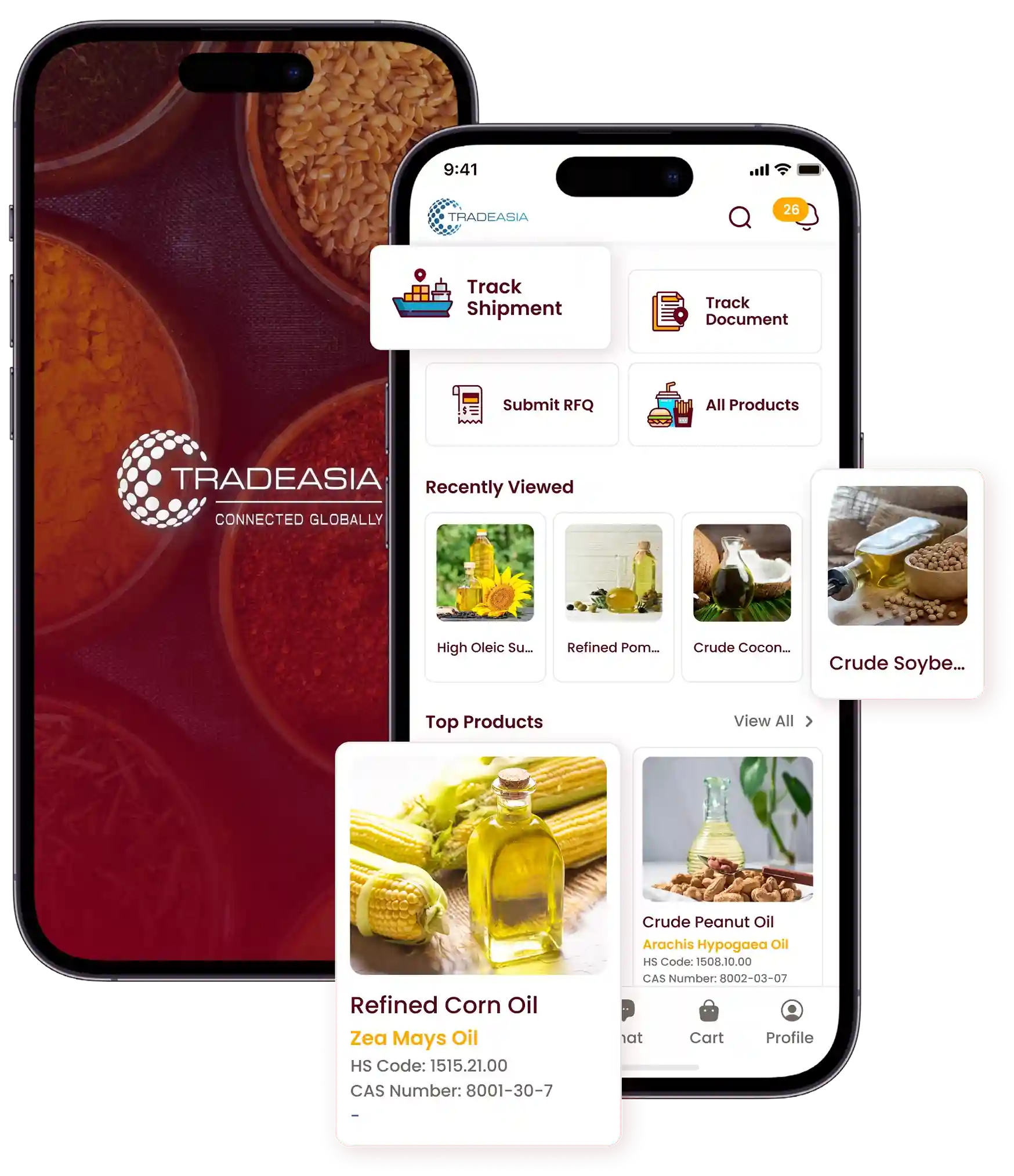
Introducing our new B2B Mobile App
Your solution to efficient shipment tracking and document access. Download Now for a seamless Experience!
Soybean Oil
Soybean oil is a light, neutral-flavored vegetable oil extracted from soybean seeds through mechanical pressing or solvent extraction. Rich in polyunsaturated fats, including omega-6 fatty acids, it undergoes refining, bleaching, and deodorizing to achieve purity, stability, and a high smoke point. Its mild taste and smooth texture make it a versatile ingredient for a wide range of culinary and industrial applications.
In application, soybean oil is widely used in frying, baking, dressings, margarine, and processed foods. Its ability to enhance texture, improve shelf stability, and blend seamlessly with other ingredients makes it a valuable component in food production. A unique feature of soybean oil is its adaptability, serving as a reliable base for diverse products while maintaining a neutral flavor profile, ensuring it complements without overpowering other ingredients.
Palm Oil
Palm oil is a naturally semi-solid vegetable oil derived from the fruit of oil palm trees. It is composed of a balanced ratio of saturated and unsaturated fats, giving it a unique stability at high temperatures and resistance to oxidation. The oil is extracted through mechanical pressing of the fruit’s mesocarp, followed by refining processes such as degumming, bleaching, and deodorizing to ensure purity, neutral flavor, and extended shelf life. Its rich texture and natural preservative properties make it a highly functional ingredient.
It is widely used in frying, baking, margarine, confectionery, and processed foods due to its high stability and versatility. Its semi-solid consistency at room temperature eliminates the need for hydrogenation, making it a trans-fat-free option. A unique feature of palm oil is its ability to enhance product texture, provide creaminess, and extend shelf life without altering flavor, making it an essential ingredient in a wide range of food applications.
Coconut Oil
Coconut oil is a versatile vegetable oil extracted from the kernel of mature coconuts. It is composed predominantly of medium-chain triglycerides (MCTs), particularly lauric acid, which contribute to its unique stability, quick digestibility, and resistance to oxidation. The oil is typically obtained through cold pressing or expeller pressing, followed by refining or purification processes to ensure a clean, mild flavor and extended shelf life. Its semi-solid texture at room temperature and distinct aroma make it a distinctive and functional ingredient.
In the food industry, coconut oil is widely used in baking, confectionery, frying, and dairy alternatives due to its rich texture and pleasant flavor. Its high smoke point and resistance to rancidity make it ideal for high-temperature cooking and long shelf-life products. A unique feature of coconut oil is its ability to impart a subtle sweetness and creamy consistency, enhancing the sensory profile of foods while providing a natural, plant-based fat source.
Olive Oil
Olive oil is a high-quality vegetable oil extracted from olives through mechanical pressing. It is rich in monounsaturated fats, particularly oleic acid, and contains antioxidants such as polyphenols, contributing to its stability and health benefits. Available in grades like extra virgin and refined, it offers varying flavor profiles and smoke points. Extra virgin olive oil, produced through cold pressing without chemical treatment, retains a robust flavor, while refined olive oil is milder and more suitable for high-temperature applications.
It is widely used in dressings, marinades, sautéing, and gourmet cooking. Its distinctive fruity and peppery notes enhance the sensory profile of dishes, while its nutritional properties and versatility make it ideal for both cold and heated applications. A unique and valued ingredient, olive oil combines exceptional flavor, health benefits, and functional performance.
Canola Oil
Canola oil is a light, neutral-flavored vegetable oil derived from the seeds of the canola plant, a variety of rapeseed. It is renowned for its low saturated fat content and high levels of monounsaturated fats, particularly omega-3 fatty acids, which contribute to its heart-healthy profile. The oil is extracted through mechanical pressing and solvent extraction, followed by refining processes such as degumming, bleaching, and deodorizing to ensure purity, stability, and a mild taste. Its light texture and high smoke point make it a versatile and functional ingredient.
In application, canola oil is widely used in frying, baking, dressings, and processed foods due to its neutral flavor and excellent heat stability. Its ability to blend seamlessly with other ingredients while enhancing texture and shelf life makes it a preferred choice for food manufacturers. A unique feature of canola oil is its balanced fat composition, which provides a healthier alternative without compromising on performance, making it ideal for both industrial food production and consumer cooking applications.
Quality Inspection
Performing quality and quantity checks before shipment to ensure a seamless
transaction and process.
Efficient Transport
Conducting secure supply chain solutions for both hazardous and non-hazardous
goods and cargo.

.webp&w=3840&q=75)