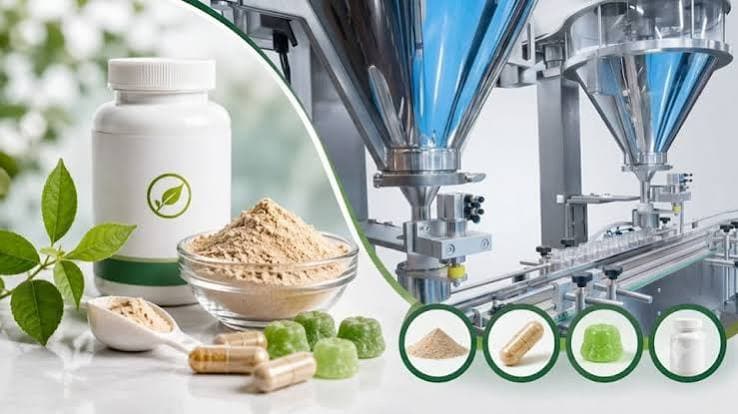
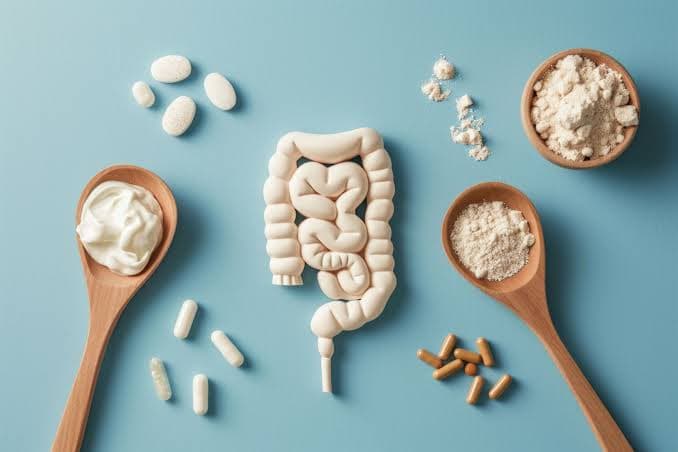
Probiotics are increasingly moving beyond refrigerated yogurt and supplements into cereals, snack bars, powdered beverages, baked foods, plant-based products and other shelf-stable formats. This expansion creates a fundamental technical problem: the microorganism must remain viable while the food itself is being processed, packaged, transported and stored at ambient conditions.
Recent research continues to identify temperature, oxygen, water activity, pH, osmotic pressure and processing stress as major determinants of probiotic survival. Importantly, these effects are highly strain-specific. A probiotic that performs well in a refrigerated dairy matrix may lose viability rapidly when exposed to baking temperatures, low-moisture conditions or oxygen during ambient storage.
For functional food brands, this means that purchasing a probiotic based only on its nominal CFU concentration or health positioning is increasingly inadequate. Procurement teams need to evaluate strain resilience, food-matrix compatibility, processing tolerance, packaging requirements and end-of-shelf-life viability together.
Shelf Stability Starts With Strain Selection
The most important sourcing decision is often made before encapsulation or packaging: which strain is being purchased?
Conventional bacterial probiotics such as Lactobacillus and Bifidobacterium species can offer strong evidence bases and established consumer recognition, but many strains are sensitive to oxygen, heat and moisture. Bifidobacterium strains can be particularly vulnerable to oxygen exposure, making packaging and formulation design critical for ambient products.
Spore-forming probiotics provide a different procurement proposition. Heyndrickxia coagulans—formerly classified as Bacillus coagulans—forms spores with substantially greater resistance to environmental and thermal stresses than many vegetative probiotic cells. A 2026 study specifically evaluated H. coagulans BC4 spores in oat and rice-bean snack matrices under baking, microwave processing, packaging and storage conditions.
Previous research on B. coagulans MTCC 5856 also demonstrated high thermal resistance and strong survival under food-processing conditions, including cooking applications.
This creates a practical ranking for shelf-stable product development:
Strain / format characteristic | Ambient stability potential | Main procurement advantage | Main limitation |
|---|---|---|---|
Spore-forming strains | Very high | Strong heat and environmental resistance | Strain-specific functionality and regulatory considerations |
Robust lactic-acid bacteria | Moderate–high | Established food applications | Stability varies substantially by strain |
Encapsulated Lactobacillus | Moderate–high | Protection can be engineered | Added cost and formulation complexity |
Encapsulated Bifidobacterium | Moderate | Can extend use beyond refrigerated products | Oxygen sensitivity remains challenging |
Highly oxygen-sensitive strains | Low–moderate | Potentially differentiated microbiome applications | Requires sophisticated oxygen control |
The ranking is directional rather than universal: strain-level validation is more important than genus-level assumptions.
Water Activity Is a Hidden Shelf-Life Variable
For dry and shelf-stable foods, water activity can become one of the most important variables determining probiotic survival.
A product may appear physically dry while still exposing probiotic cells to enough moisture to accelerate deterioration. Moisture migration between ingredients can also create localized conditions that are more damaging than the overall moisture specification suggests.
Recent reviews identify water activity, humidity and moisture fluctuations among the major factors affecting probiotic survival during storage.
This makes moisture management a procurement issue as much as a formulation issue.
Ingredient buyers should therefore ask probiotic suppliers for:
Stability data across relevant water-activity ranges
Moisture sensitivity of the specific strain
Recommended storage humidity
Compatibility with hygroscopic ingredients
Stability in the final food matrix rather than only in the raw ingredient
Recommended overage levels
End-of-shelf-life CFU data
The key shift is from asking “How many CFUs does the ingredient contain?” to “How many viable CFUs will remain when the consumer opens the product?”
Oxygen Exposure Can Undermine Ambient Products
Oxygen is another major barrier, particularly for oxygen-sensitive probiotic bacteria.
Recent functional-food research identifies oxygen exposure as a major concern for strains such as Bifidobacterium. Oxygen can compromise cell integrity and accelerate viability loss during storage. Packaging therefore becomes part of the probiotic delivery system rather than simply a barrier protecting the food from external contamination.
This has direct implications for sourcing decisions.
High-barrier films, oxygen-reduced headspace, improved sealing systems and oxygen-scavenging technologies can help protect sensitive cultures. However, packaging upgrades add cost and may not be necessary when a naturally resilient strain can deliver the required performance.
That creates a useful procurement equation:
Resilient strain + conventional packaging
may sometimes be more commercially attractive than:
Sensitive strain + advanced encapsulation + high-barrier packaging.
The cheapest probiotic ingredient is therefore not necessarily the lowest-cost solution.
Encapsulation Is Becoming a Formulation Tool, Not a Universal Solution
Microencapsulation remains one of the leading technologies for protecting probiotic cells from heat, oxygen, moisture and gastrointestinal stress.
Current research covers spray drying, freeze drying, emulsification, extrusion, coacervation, electrospraying and other delivery technologies. Protective materials include alginate, pectin, chitosan, proteins, starch derivatives, lipids and combinations of these materials.
A 2026 review of freeze-drying technologies emphasizes that probiotic viability remains challenged by temperature, oxygen and pH fluctuations during processing and storage.
However, encapsulation should not automatically be treated as the answer.
It can increase ingredient costs, add manufacturing steps and potentially affect sensory characteristics. Larger particles may create undesirable mouthfeel, while the interaction between encapsulating material and the food matrix can determine whether the protection actually translates into better commercial stability.
The better procurement strategy is therefore:
Select the most naturally suitable strain first, then use encapsulation where the product's stress profile requires additional protection.
Shelf-Stable Food Formats Create Different Stress Profiles
A probiotic ingredient should not be evaluated in isolation from its intended food format.
Baked Foods
Bars, cookies, crackers and other baked products expose probiotics to significant thermal stress. Conventional vegetative cultures can be difficult to maintain through processing, increasing the attractiveness of heat-tolerant or spore-forming strains.
Cereals and Dry Snacks
Low-moisture products can offer better ambient stability, but oxygen exposure and moisture migration remain important. Packaging and water-activity control become central to maintaining viability.
Powdered Beverages
Powders may avoid high-temperature processing after probiotic addition, but hygroscopic ingredients can expose cultures to moisture during storage. Sachet and pouch barrier performance therefore becomes important.
Plant-Based Foods
Fruit and plant-based matrices can introduce acidity, oxygen and other compounds that influence viability. Recent research highlights the challenges of maintaining probiotic survival in plant matrices because of their pH, oxygen content and limited buffering capacity.
Ambient Functional Beverages
These represent one of the more difficult applications because probiotics may face combinations of acidity, oxygen, processing stress and extended storage. Product developers must often balance strain selection with packaging, encapsulation and processing strategy.
The CFU-at-Expiry Question
One of the most important commercial distinctions is between CFU at manufacture and CFU through the product's shelf life.
The NIH Office of Dietary Supplements notes that probiotic CFU counts can decline over time and that some products specify the number of CFUs at manufacturing while others specify the amount expected through the expiration or use-by date.
For procurement teams, this creates a major supplier-evaluation criterion.
A supplier offering 100 billion CFU/g at production is not automatically superior to one offering 50 billion CFU/g if the first ingredient loses viability rapidly during storage while the second maintains its performance.
Brands should therefore request stability curves showing:
Initial CFU
CFU after processing
CFU during accelerated storage
CFU at expected shelf life
CFU after temperature excursions
Performance under relevant humidity conditions
Strain identity and enumeration methodology
This data can support a more realistic cost-per-surviving-CFU calculation.
Ranking the Most Important Sourcing Criteria
For shelf-stable functional foods, procurement priorities can be ranked as follows:
Rank | Sourcing criterion | Why it matters |
1 | Strain-specific stability | Determines whether the organism can survive the intended application |
2 | End-of-shelf-life CFU | Connects ingredient performance with the commercial claim |
3 | Heat tolerance | Critical for baked and thermally processed products |
4 | Moisture / water-activity tolerance | Central to dry and ambient products |
5 | Oxygen tolerance | Particularly important for Bifidobacterium and other sensitive strains |
6 | Matrix compatibility | The same strain can behave differently in different foods |
7 | Encapsulation performance | Determines whether added protection delivers measurable benefits |
8 | Packaging compatibility | Barrier performance can materially influence viability |
9 | Stability under distribution stress | Important for global ambient supply chains |
10 | Cost per viable delivered dose | More meaningful than ingredient price alone |
This ranking illustrates why probiotic sourcing is becoming more technically sophisticated.
What Suppliers Need to Prove
Probiotic suppliers competing for functional-food contracts will increasingly need to provide more than certificates of analysis.
The strongest supplier documentation should include:
Strain identity: precise genus, species and strain designation.
Viability data: CFU/g or CFU/serving at manufacturing and throughout shelf life.
Processing tolerance: evidence under the customer's actual thermal, drying or mixing conditions.
Storage data: real-time and accelerated stability under relevant temperature and humidity conditions.
Matrix studies: performance in the actual food category or a closely comparable formulation.
Encapsulation specifications: coating material, particle characteristics, release behavior and stability improvement.
Packaging recommendations: oxygen and moisture barrier requirements.
Regulatory documentation: applicable food-safety, identity, quality and regulatory status.
Application support: technical assistance during pilot production and scale-up.
The supplier that can demonstrate predictable viability in the customer's finished product will have a stronger commercial position than one competing only on CFU concentration or price.
Stability Engineering Is Opening the Door to More Ambient Products
Recent research is moving toward a broader concept of material–process–strain co-design, where probiotic strain selection, encapsulation materials, processing conditions and product formulation are optimized together rather than sequentially. A 2026 review highlights this approach as a pathway toward greater viability, consistency and scalability.
This could significantly expand the range of probiotic products that can be distributed without refrigeration.
Instead of designing a food first and attempting to “add probiotics” afterward, developers can increasingly select the probiotic system around the product's manufacturing environment.
That approach could make probiotics more compatible with:
Ambient snack products
Shelf-stable cereals
Functional powders
Protein and nutrition bars
Plant-based beverages
Baked functional foods
Fortified confectionery
Instant nutrition products
The commercial opportunity is significant because gut-health ingredients continue to attract investment and product-development activity. One current market estimate values the broader global gut-health ingredients market at approximately $34.3 billion in 2026, although market estimates vary by methodology and category definition.
The Procurement Shift: From Probiotic Ingredient to Probiotic System
The biggest change for buyers is conceptual.
A probiotic should no longer be evaluated simply as a microbial ingredient with a stated CFU concentration. For shelf-stable foods, it is better understood as a delivery system consisting of strain + formulation + processing + packaging + storage conditions.
This changes supplier negotiations.
Instead of asking:
“What is your highest-CFU probiotic?”
buyers should ask:
“Which strain and delivery system can reliably deliver our required viable dose at the end of shelf life under our manufacturing and distribution conditions?”
That question immediately moves procurement toward measurable performance.
The Intelligence Takeaway
Probiotic stability is becoming a technical sourcing challenge because shelf-stable foods expose live cultures to combinations of heat, oxygen, moisture, acidity and storage stress.
The strongest procurement strategy is not necessarily to purchase the highest-potency culture or the most sophisticated encapsulation system. It is to match the strain to the food matrix and processing environment, then add encapsulation, moisture protection and high-barrier packaging where the risk assessment justifies the cost.
For functional-food brands, the most valuable supplier will increasingly be the one that can demonstrate strain-specific, end-of-shelf-life performance in the finished product—not simply impressive CFU numbers at the factory gate.
Colemanite (-75 Micron) - Turkey CAS: 12291-65-5