
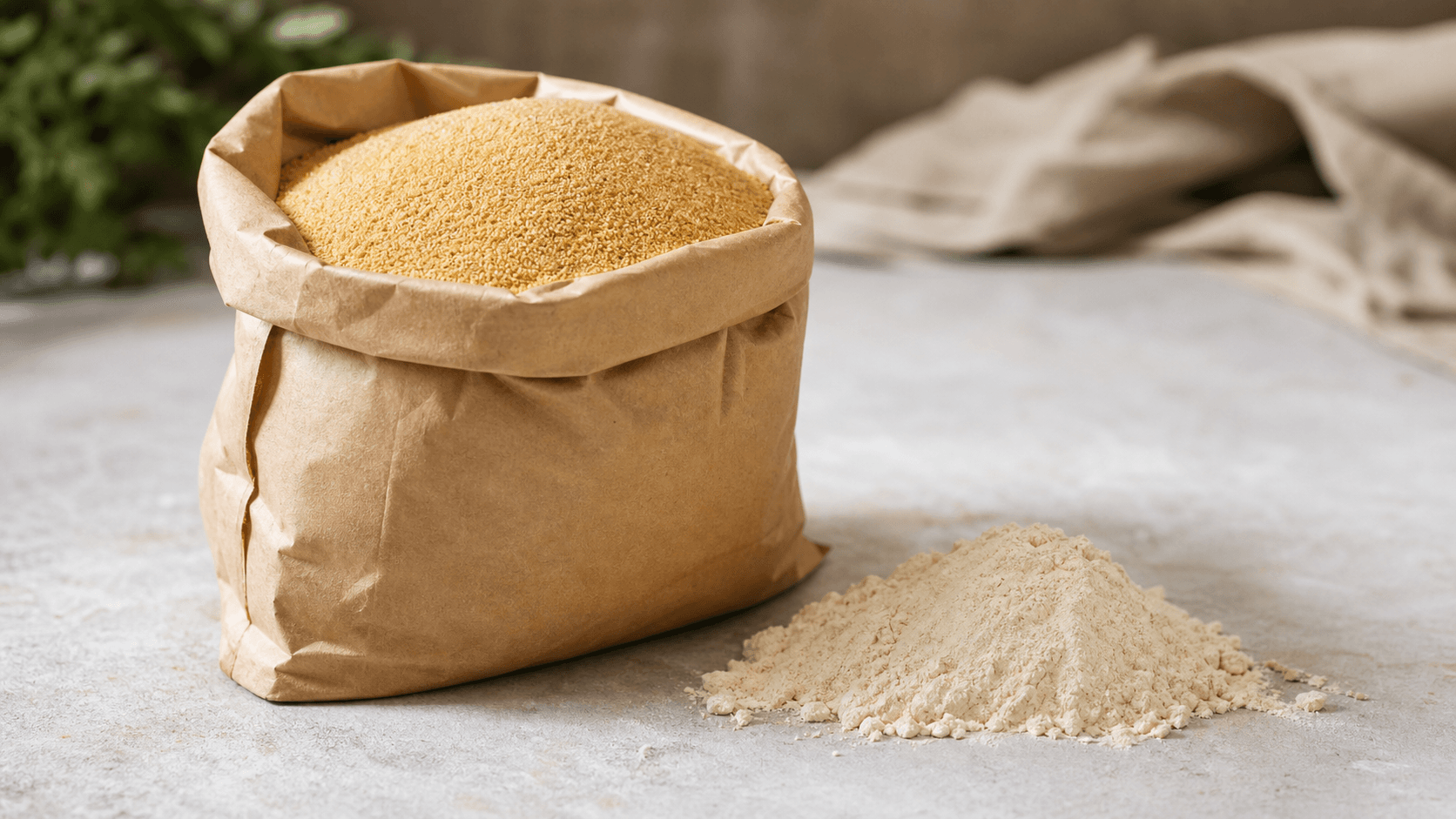
Lecithin price trends are becoming more complex as soy and sunflower crop conditions move in different directions. For bakery and confectionery buyers, that divergence matters because lecithin is not simply a low-cost processing ingredient. It supports emulsification, dough handling, chocolate fluidity and production consistency, while the choice between soy and sunflower lecithin can influence both cost and sourcing flexibility.
Procurement teams therefore need to look beyond a single quoted market price. Crop availability, oilseed economics, processing capacity, origin, specification and customer preferences can all change the relative attractiveness of soy and sunflower lecithin.
Why Soy and Sunflower Lecithin Prices Are Diverging
Soy and sunflower lecithin originate from different agricultural supply chains, so their pricing does not always move together. A change in soybean availability can affect soy lecithin economics without producing the same effect in sunflower markets.
The divergence becomes especially relevant when buyers compare equivalent grades for food manufacturing. A lower headline price may not deliver the best purchasing outcome if the alternative has different technical characteristics, freight costs or qualification requirements.
For procurement teams, the key question is not simply whether lecithin prices are rising or falling. It is which lecithin source offers the strongest combination of price, performance and supply security for the intended application.
Crop Conditions Are Becoming a Procurement Variable
Agricultural markets create an important cost layer for lecithin buyers. Soybeans and sunflower seeds compete within broader oilseed markets, but regional harvest conditions, acreage decisions, weather and crushing economics can produce different supply outcomes.
When soybean supply remains relatively comfortable while sunflower availability becomes tighter, buyers may see a widening price relationship between the two lecithin sources. The reverse can also occur when soybean fundamentals become less favorable.
Procurement managers should therefore monitor:
Crop availability: Harvest expectations can influence processor costs and the availability of raw material for lecithin production.
Crushing economics: Lecithin availability depends partly on oilseed processing activity, which connects lecithin supply to the wider vegetable oil market.
Regional production: Origin can affect freight, lead times and the availability of suitable food-grade material.
Weather conditions: Weather disruptions can change crop expectations quickly and increase uncertainty around future supply.
These variables make forward sourcing decisions more important for high-volume bakery and confectionery manufacturers.
What Lecithin Price Trends Mean for Bakery Buyers
Bakery manufacturers use lecithin for functions that directly influence production efficiency and finished-product quality. It can help improve dough handling, support ingredient dispersion and reduce processing friction in selected formulations.
Price changes therefore need to be evaluated against the value that lecithin delivers. Switching to a cheaper material without assessing functional performance can create additional formulation or production costs.
For bakery procurement teams, the most important considerations include:
Whether the lecithin grade meets the required food specifications.
Whether the material performs consistently across production batches.
Whether the supplier can maintain regular deliveries during crop-driven market shifts.
Whether a soy or sunflower origin aligns with customer and product requirements.
Whether changing sources would require formulation trials or internal approval.
A sourcing decision based only on price can overlook these operational factors.
Chocolate and Confectionery Demand Adds Another Layer
Confectionery manufacturers have their own reasons to monitor lecithin markets closely. In chocolate processing, lecithin can help manage viscosity and improve the flow characteristics of chocolate masses, supporting efficient processing and coating operations.
When raw material costs increase, manufacturers may examine formulation efficiency rather than immediately replacing an ingredient. Even small changes in lecithin pricing can become meaningful for large-volume chocolate production where purchasing volumes remain substantial.
Buyers should consider the interaction between lecithin cost and chocolate production economics. A material that provides reliable performance at a slightly higher unit price may prove more economical than a lower-priced option that creates processing variability.
This is where specification-led purchasing becomes valuable. Buyers should compare materials using technical performance and total delivered cost rather than comparing nominal prices alone.
Soy Lecithin Versus Sunflower Lecithin in Sourcing Decisions
Soy lecithin remains an important commercial option because of its established use across food manufacturing and its integration with the large global soybean processing chain. Its broad availability can make it an attractive choice for buyers seeking established supply channels.
Sunflower lecithin provides another sourcing route and can appeal to manufacturers that require a non-soy alternative. Its position in the market also makes it useful as part of a diversification strategy when buyers want to reduce dependence on one crop or supply chain.
The choice between the two should reflect the buyer's specific requirements:
Soy lecithin may suit buyers prioritising established supply networks and broad commercial availability.
Sunflower lecithin may suit buyers seeking a non-soy option or additional sourcing diversification.
Neither option should automatically be treated as a universal substitute. Procurement teams should confirm functionality, grade, documentation and formulation compatibility before switching material.
The Real Cost Includes More Than the Lecithin Quote
A supplier's quoted price provides only one part of the purchasing equation. Importers and industrial buyers should calculate the delivered cost after considering freight, insurance, duties where applicable, packaging, financing and inventory requirements.
Lead time also matters. A lower-cost shipment that requires a longer delivery window may force a manufacturer to carry additional safety stock.
Buyers should examine:
Price basis: Confirm whether the quote covers the same commercial terms and specification.
Origin: Compare the agricultural and logistical implications of each source.
Minimum order quantity: Larger commitments may improve pricing but increase inventory exposure.
Lead time: Evaluate whether delivery schedules match production requirements.
Shelf life and storage: Consider warehouse conditions and expected stock rotation.
Documentation: Confirm food-grade specifications and required certificates before placing orders.
This approach helps procurement teams avoid false savings.
How Procurement Teams Can Manage Crop-Driven Volatility
A flexible sourcing strategy can reduce the impact of sudden changes in either oilseed market. Buyers that depend entirely on one source may face greater exposure when crop conditions, processing capacity or logistics change.
One practical approach involves maintaining qualified suppliers for both soy and sunflower lecithin where the formulation permits it. This does not mean switching materials whenever a price changes. Instead, it creates an additional option when the market relationship shifts.
Procurement teams can strengthen their position by:
Tracking both markets: Follow soybean and sunflower supply conditions rather than monitoring only the preferred lecithin source.
Maintaining supplier alternatives: Keep more than one qualified supplier where volumes justify the effort.
Reviewing specifications: Define which lecithin characteristics are essential and which allow commercial flexibility.
Testing alternatives early: Conduct technical evaluations before a supply disruption forces an urgent change.
Negotiating around volume: Use predictable consumption to seek stronger commercial terms without building excessive inventory.
Planning purchase windows: Divide larger requirements across suitable purchasing periods when market uncertainty remains high.
The objective is not to predict every crop movement. It is to build enough flexibility to respond when the market changes.
Supplier Selection Matters as Much as Market Timing
Strong procurement performance depends on supplier quality as well as timing. A competitive offer has limited value if the supplier cannot maintain consistent specifications or provide dependable shipment execution.
For chemical and ingredient traders, this creates an opportunity to differentiate through reliable sourcing rather than price alone. Buyers increasingly need suppliers that can provide clear specifications, responsive communication and practical alternatives when market conditions change.
Before finalising a lecithin supplier, procurement teams should assess:
Product specification and food-grade suitability.
Country of origin and available supply routes.
Production capacity and regular shipment capability.
Packaging formats suitable for the buyer's facility.
Commercial terms and minimum order requirements.
Documentation and traceability.
Ability to offer alternative origins or lecithin types when required.
A supplier that understands the buyer's application can often create more value than one offering only the lowest initial quote.
What Bakery and Confectionery Buyers Should Watch Next
Lecithin purchasing decisions will continue to depend on the relationship between agricultural supply, processing economics and food manufacturing demand. Soy and sunflower markets may continue to diverge at different points because their crop fundamentals are not identical.
For buyers, this creates both risk and opportunity. When one lecithin source becomes relatively expensive or difficult to secure, an established alternative can provide leverage during negotiations and support continuity of supply.
The strongest procurement strategy combines market monitoring with technical readiness. Buyers that understand their minimum formulation requirements, qualify alternative suppliers and compare total delivered costs will be better positioned to respond to changing lecithin price trends.
The Bottom Line for Procurement Teams
Lecithin price trends should not be viewed as a simple commodity price movement. Soy and sunflower crops can create different supply conditions, while bakery and confectionery demand adds a consistent industrial requirement for reliable, functional emulsifiers.
For procurement managers, the priority should be flexibility. Comparing soy and sunflower lecithin, maintaining qualified supply options and evaluating total delivered cost can help protect margins without compromising production requirements.
For traders, importers and exporters, the market also rewards suppliers that can connect competitive pricing with dependable quality and supply continuity. A sourcing strategy built around multiple options can give buyers greater control as crop conditions change. Ready to source Soya Lecithin from verified global suppliers? Explore competitive offers on our platform today.
Soya Lecithin CAS: 8002-43-5