Blue and purple food colorants are moving from niche formulation choices toward strategic sourcing categories as manufacturers respond to demand for recognizable, naturally derived ingredients. Spirulina and anthocyanin sit at the center of this shift, offering different routes to blue and purple shades while creating distinct procurement challenges.
For chemical traders, importers, exporters and ingredient buyers, the issue extends beyond finding a supplier. Raw material availability, extraction or processing capacity, seasonal conditions, quality specifications, geographic concentration and formulation requirements can all influence delivered cost and supply continuity.
The result is a market where two suppliers offering a similar visual color may have very different cost structures and supply risks.
Why Spirulina and Anthocyanin Matter in Natural Colorants
Spirulina-derived colorants and anthocyanins serve different technical roles within the natural colorant market. Spirulina is particularly associated with blue shades, while anthocyanins can provide red, purple and blue-purple hues depending on their source and formulation environment.
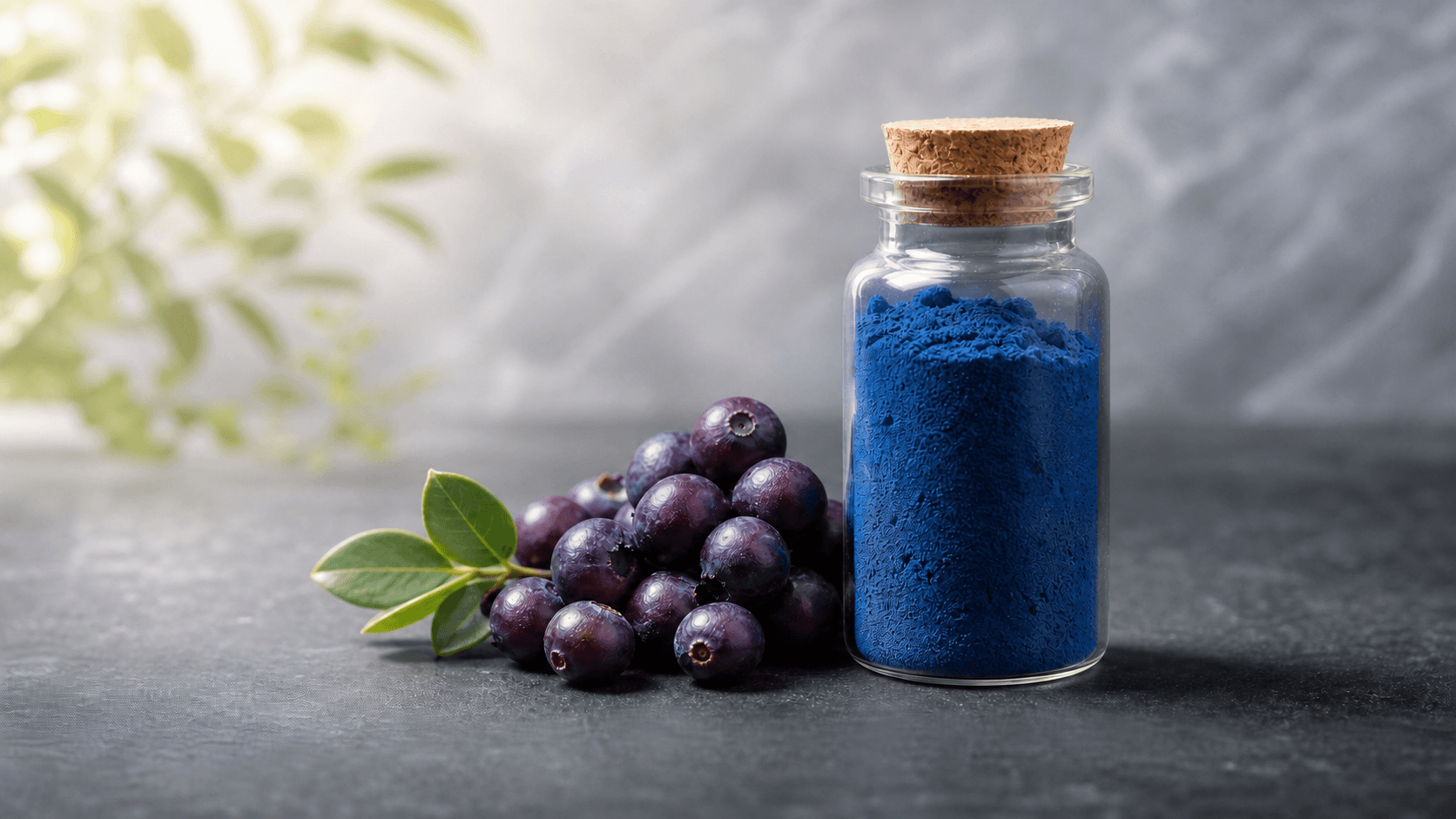
Spirulina is a microalgal ingredient that contains phycocyanin, the pigment responsible for its characteristic blue color. Suppliers process the biomass to obtain concentrated color fractions suitable for applications where a natural blue appearance is required.
Anthocyanins belong to a group of naturally occurring pigments found in sources such as berries, purple vegetables and other plant materials. Their shade can change with formulation conditions, including acidity, which makes application requirements especially important when buyers evaluate material specifications.
This distinction matters in procurement because the two categories do not share identical supply chains, production economics or formulation behavior.
Spirulina Supply Chains Face Concentration and Processing Constraints
Spirulina colorant supply depends on both biomass production and downstream processing. Cultivation requires suitable environmental conditions, while producing a commercially useful colorant requires controlled extraction, concentration, drying and quality management.
For buyers, this creates several points where supply can tighten. A disruption in biomass production does not necessarily translate immediately into a shortage of finished colorant, but prolonged constraints can affect inventories and replacement costs.
Processing capability also matters. Buyers sourcing a standardized colorant should evaluate whether suppliers can consistently deliver the required pigment concentration, physical form and microbiological quality rather than assessing supply solely by the availability of raw spirulina.
Key procurement considerations include:
Source continuity: Buyers should determine whether a supplier relies on one cultivation region or maintains access to multiple production sources.
Processing capacity: Extraction and concentration capability can influence how quickly suppliers respond when demand increases.
Specification consistency: Color strength, purity and performance need to remain within agreed commercial specifications across batches.
Storage conditions: Natural colorants can require controlled handling to protect product quality during storage and transportation.
These factors can make a seemingly inexpensive offer less attractive if the supplier cannot maintain consistent deliveries.
Anthocyanin Availability Depends on Plant-Based Feedstocks
Anthocyanin supply chains have a different structure because the pigments originate from plant materials. Berry skins, grape-derived materials, purple vegetables and other botanical sources can contribute to commercial anthocyanin production.
Availability therefore depends partly on agricultural output and processing activity. Crop yields, harvest timing, geographic conditions and competition for botanical raw materials can influence the amount of pigment available to processors.
The supply chain also contains a conversion stage between agricultural material and standardized commercial colorant. Extraction, purification and concentration determine the final product's usable pigment content and application performance.
For procurement teams, this means a supplier's inventory position may not tell the entire story. A strong sourcing program should also consider the underlying feedstock and the supplier's access to future production.
What Drives Natural Colorant Cost Volatility
Cost volatility in spirulina and anthocyanin does not come from one factor. Buyers typically face a combination of agricultural, biological, processing, energy, logistics and demand-side influences.
Several factors deserve close attention:
Raw material conditions: Changes in biomass or crop availability can affect the cost base before processing begins.
Seasonality: Agricultural feedstocks can create periodic supply variations, particularly for plant-derived pigments.
Processing costs: Extraction, concentration, drying and quality-control requirements add value beyond the underlying raw material.
Energy and logistics: Manufacturing and transportation costs can affect delivered prices even when raw material conditions remain stable.
Demand shifts: New product launches and reformulation programs can quickly increase demand for natural blue and purple colorants.
Specification requirements: Higher purity, concentration or application-specific performance can narrow the supplier pool and increase sourcing costs.
A procurement team should therefore compare offers on a delivered and specification-adjusted basis rather than selecting the lowest nominal price.
Why Natural Blue and Purple Demand Can Tighten Supply
Consumer interest in naturally derived colors has encouraged food and beverage manufacturers to reconsider synthetic color systems in selected applications. Blue remains a particularly important category because manufacturers have fewer natural options that deliver strong, stable color across different product environments.
This creates a commercial advantage for suppliers with reliable access to suitable natural blue colorants. It can also create pressure when multiple manufacturers seek the same grades simultaneously.
Purple colorants face a different challenge. Anthocyanins can offer attractive shades but their performance depends strongly on formulation conditions, meaning buyers may require application-specific grades rather than a universal product.
For traders, these differences create opportunities to add value through technical product matching. A supplier that understands the buyer's formulation requirements can compete on consistency and suitability rather than price alone.
How Buyers Can Reduce Supply Chain Exposure
Natural colorant procurement works best when purchasing teams treat supply continuity as a strategic issue rather than a transactional purchase. A low-cost shipment has limited value if a replacement cannot arrive when production schedules require it.
Buyers can strengthen their position by:
Qualifying multiple sources. Maintaining approved alternatives reduces dependence on a single supplier or production region.
Defining technical specifications clearly. Buyers should specify pigment strength, physical form, purity requirements and intended application wherever relevant.
Monitoring lead times. Changes in supplier production schedules can provide early signals of tightening availability.
Planning purchases around production cycles. Advance procurement can reduce exposure to sudden spot-market pressure.
Comparing total landed cost. Freight, duties, packaging, payment terms and delivery reliability can materially change the economics of an offer.
Maintaining replacement grades. Technical teams should identify acceptable alternatives before a shortage occurs rather than during an urgent production requirement.
This approach is particularly useful for importers and distributors that need to maintain inventory for downstream food and beverage manufacturers.
Regional Sourcing Creates Different Procurement Dynamics
The geography of natural colorant production can influence both cost and supply reliability. Spirulina production depends on suitable cultivation environments and established processing infrastructure, while anthocyanin production follows the availability of relevant agricultural feedstocks and extraction facilities.
Importers should pay attention to the full logistics route rather than focusing only on the supplier's country. Port congestion, freight availability, transit time and customs requirements can affect the final economics of an otherwise competitive offer.
Regional diversification can also improve resilience. A buyer that qualifies suppliers across different production areas may have more options when one origin experiences crop pressure, processing constraints or logistics disruption.
For exporters and traders, this creates an opportunity to build supply programs around multiple origins while maintaining consistent commercial specifications.
Quality Control Is Central to Natural Colorant Trading
Natural pigments require disciplined quality management because their performance can vary according to source and processing conditions. Buyers need confidence that material purchased in one shipment will perform similarly to material received later.
Commercial specifications should reflect the intended application. Depending on the product, buyers may evaluate pigment concentration, color intensity, microbiological parameters, moisture, purity and other quality characteristics.
Documentation also supports smoother international trade. Consistent specifications, certificates and batch-level information can reduce delays during supplier qualification and import procedures.
Consistency becomes a commercial advantage when the market experiences price pressure. Buyers may accept a higher offer when it reduces the operational risk associated with inconsistent material.
The Outlook for Spirulina and Anthocyanin Procurement
Demand for naturally derived blue and purple colorants is likely to remain closely linked to product innovation in food and beverages. Manufacturers seeking recognizable ingredient solutions can continue to create opportunities for suppliers that offer reliable quality and scalable supply.
Cost conditions will remain sensitive to the underlying supply chains. Spirulina depends on biological production and specialized pigment processing, while anthocyanins remain connected to agricultural feedstocks and extraction economics.
For buyers, the most effective strategy is not simply to predict whether prices will rise or fall. It is to understand which supply factors can move the market and establish sourcing options before those factors become urgent procurement problems.
The Bottom Line for Procurement Teams
Spirulina and anthocyanin offer important routes into the expanding natural blue and purple colorant market, but their supply chains require different procurement strategies. Availability depends on biological or agricultural feedstocks, processing capacity, quality requirements and logistics, while cost volatility can emerge from several points across the chain.
Chemical traders and ingredient buyers can reduce exposure by qualifying multiple suppliers, monitoring lead times, maintaining clear specifications and evaluating offers on total delivered value. A proactive sourcing strategy can turn supply uncertainty into a manageable commercial variable rather than a production risk.
Ready to source Spirulina and Anthocyanin from verified global suppliers? Explore competitive offers on our platform today.
Ascorbic Acid CAS: 50-81-7