Introduction
Guar gum is a natural polysaccharide extracted from the seeds of the Cyamopsis tetragonoloba plant.ANA The same crop feeds two vastly different sectors: the food industry, where it functions as a thickener and stabilizer, and the oilfield, where it improves drilling fluid performance. Because each sector has unique performance, safety, and regulatory demands, the specifications for food‑grade and oilfield‑grade guar gum are not interchangeable.
Origin and Production
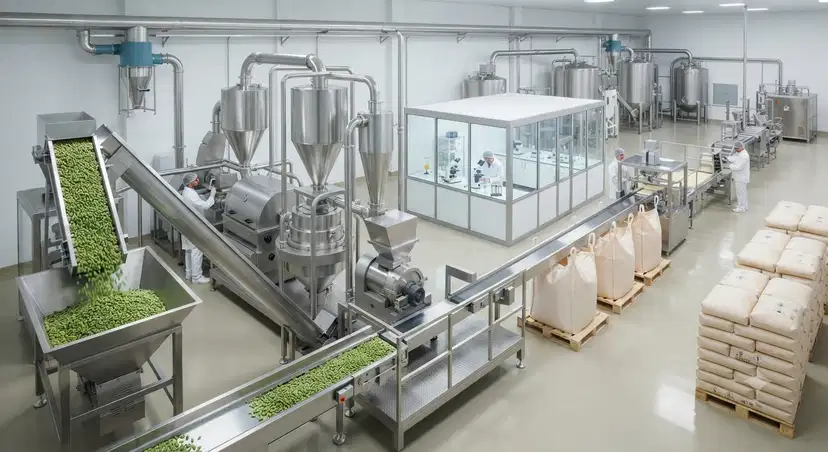
Both grades start with the same seed, but the production chain diverges early. Food‑grade guar undergoes a more stringent cleaning process to remove any foreign material that could cause contamination. The product is then milled to a fine particle size to ensure homogeneity in food formulations. Oilfield guar, on the other hand, is processed to meet the viscosity Inet requirements for drilling muds. It is typically milled to a coarser consistency, which helps it to suspend better in the high‑pressure, high‑temperature (HPHT) environments of deep wells.
Food‑Grade Specifications
Purity: Must be free of contaminants such as heavy metals, pesticides, and microbial counts that exceed food safety limits.
Particle Size: Typically 0.60–0.75 mm to ensure smooth dispersion in liquids.
Viscosity: Measured at 25 °C; must reach a minimum of 20,000 cps in a 1 % solution to satisfy thickening requirements.
Regulatory Compliance: Must meet FDA, EU, and other local food safety regulations.
Labeling: Requires traceability tags for batch identification and recall readiness.
Oilfield‑Grade Specifications
Viscosity Range: Typically 5,000–15,000 cps at 100 °C to support the rheological properties of drilling fluids.
Particle Size: Larger particles (up to 1.5 mm) are acceptable and often preferred to avoid colloidal breakdown under shear.
Salt Tolerance: Must withstand high salinity environments without precipitation.
Biodegradability: Required to prevent environmental contamination at the well site.
Additive Compatibility: Must be compatible with surfactants, weighting agents, and corrosion inhibitors commonly used in drilling muds.
Quality Testing & Standards
Food‑grade guar gum is subject to ISO 15247 and ASTM F1527 for purity and safety, while oilfield guar is tested against API 56 and ISO 11939 for drilling fluid performance. The testing regimes differ in the parameters measured, the temperature conditions, and the acceptable tolerances. For example, a food‑grade sample might be evaluated folding жасау for heavy metal concentration under 10 ppm, whereas an oilfield sample is tested for total solids content and drag coefficient.
Procurement Implications
Supply Chain Segmentation: Because the markets are not interchangeable, procurement teams must maintain separate supply contracts and inventory buffers for each grade.
Price Volatility: Food‑grade guar is more sensitive/start to price changes driven by consumer demand and food safety regulations. Oilfield guar prices fluctuate with oil prices and drilling activity.
Lead Times: Food‑grade production often has a longer lead time due to stricter quality controls, whereas oilfield guar can be produced more rapidly to meet sudden drilling campaigns.
Risk Management: Diversifying suppliers across geographic regions mitigates the risk of crop failure or geopolitical disruptions that may affect one market more heavily.
Regulatory Audits: Food‑grade suppliers must be prepared for audits by health authorities, while oilfield suppliers need to comply with industry safety and environmental audits.
Conclusion
Though both food‑grade and oilfield‑grade guar gumoptic originate from the same crop, their specifications, testing, and procurement strategies diverge sharply. By understanding these differences, procurement teams can anticipate supply pressures, negotiate better terms, and ensure that the right product reaches the right market without compromising performance or compliance.
Guar Gum (E412) CAS: 9000-30-0